Bring it in.
Paste it in, add screenshots or a PDF, or build it week by week. You check it before it goes live. Mileage or time on feet, Steady reads both.


Bring your plan out of a chat, a document or your notes. Steady keeps it in step with the training you actually do.

Most runners don't need another training plan. They need a better way to follow the one they already have.
A plan in a chat or a note stays where you left it. The first time a session moves, it starts drifting away from the training you actually do.
Paste it in, add screenshots or a PDF, or build it week by week. You check it before it goes live. Mileage or time on feet, Steady reads both.
Send a session to Apple Watch with the warm-up, reps, recoveries and paces from your plan.
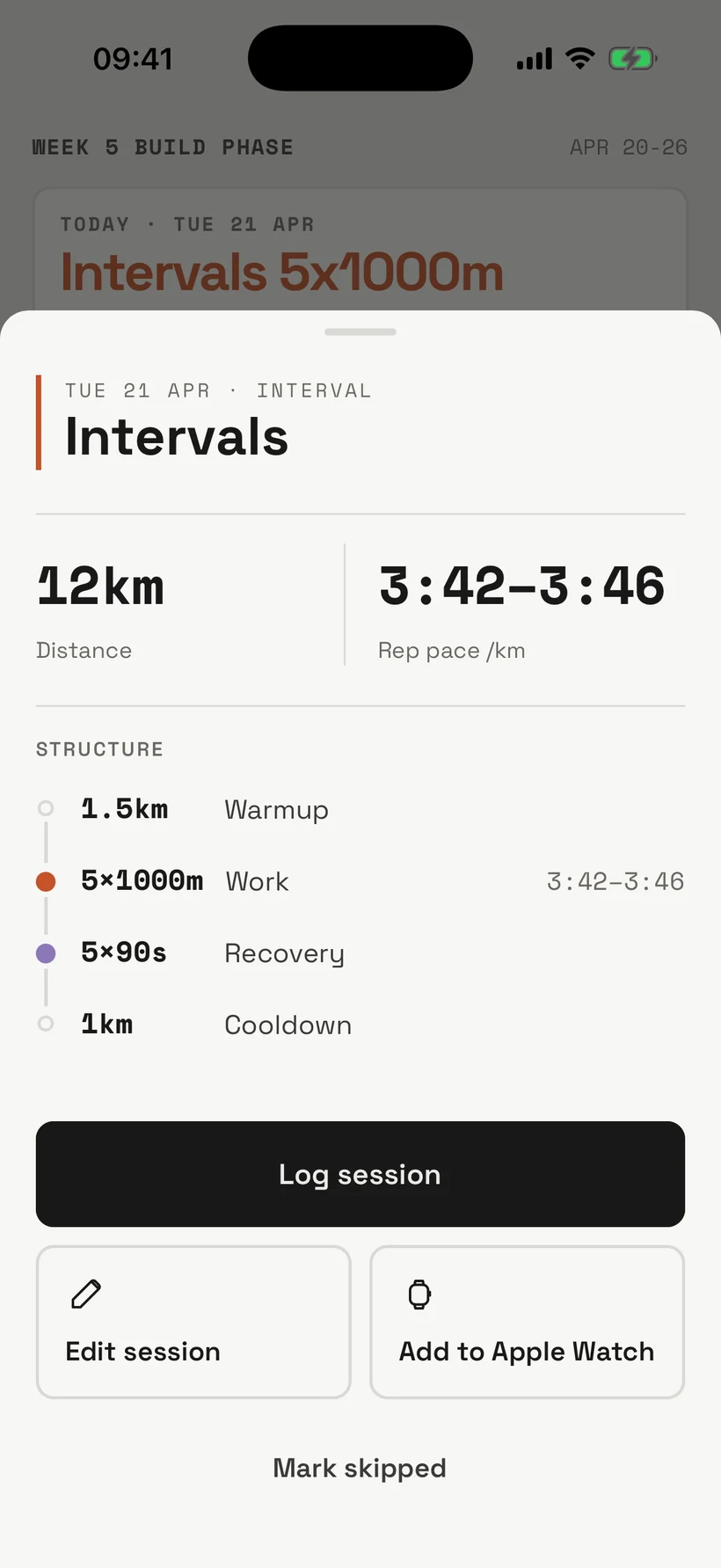
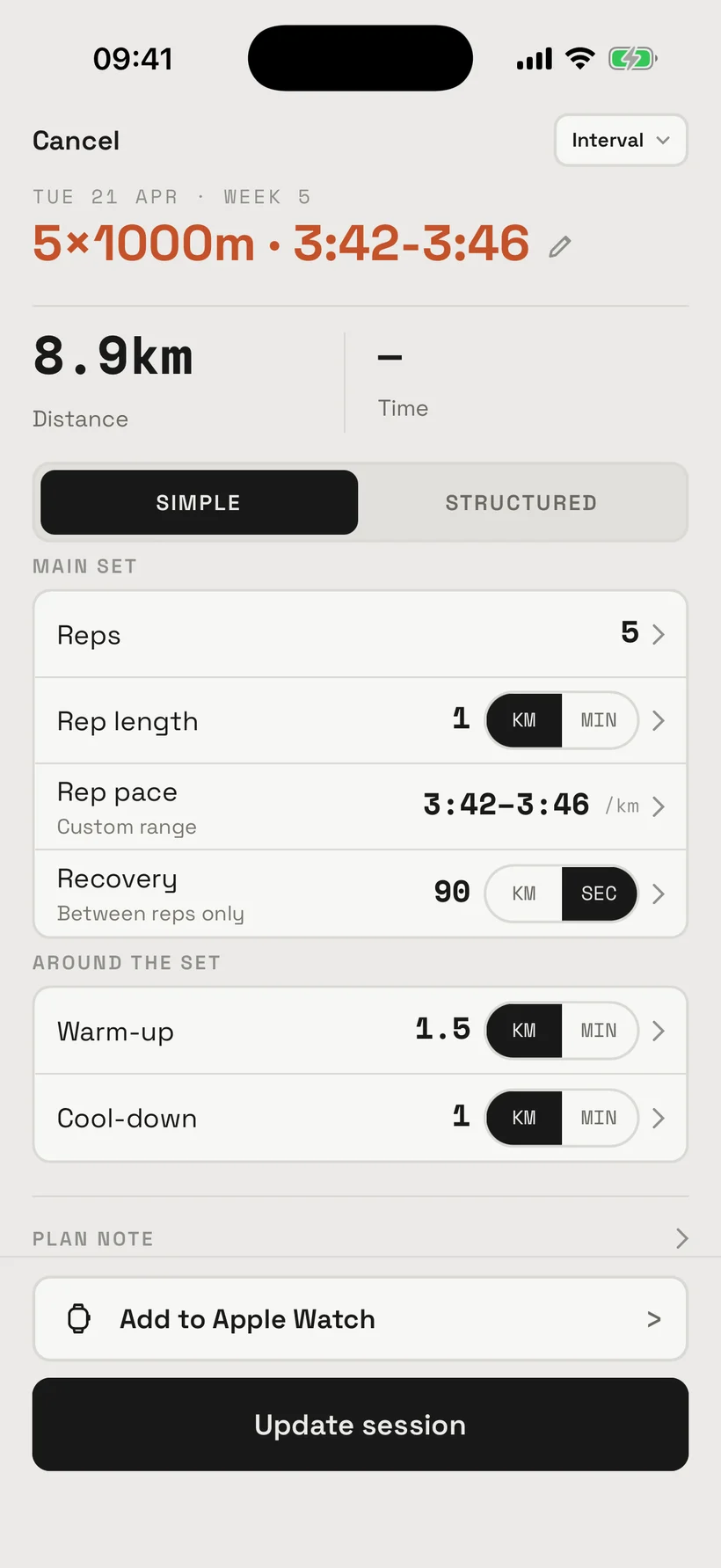
Swap a day, change a pace, rework a week when life gets in the way. Nothing changes unless you change it.
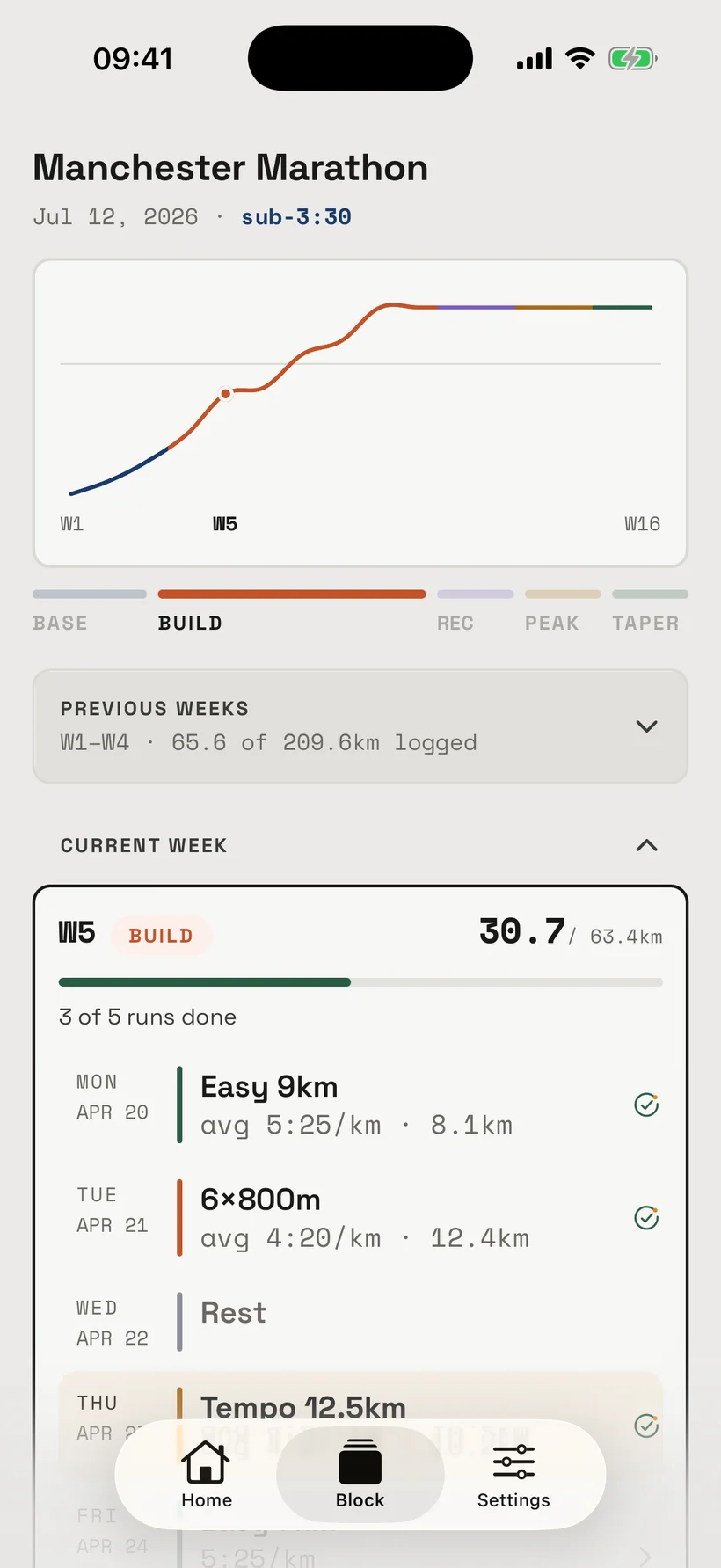
Runs come back from Apple Health and land on the session they belong to, with pace, heart rate and splits next to what you planned. Add how it felt, your shoes, your fuel and any niggle.
It's in private beta now. Leave your email and I'll send one note when it's on the App Store. No marketing, and I don't sell data.
Apple Health is optional. Steady reads your runs and never writes to Health.
I build my own training from bits I've picked up online. Pfitz, Jack Daniels, Reddit, sometimes ChatGPT or Claude.
Finding a plan was never the hard part. Keeping it up to date once life happened was. Runs moved, niggles turned up, the spreadsheet said one thing and Apple Health said another. I'd end up taking screenshots and updating three tools for one changed run.
So Steady keeps it in one place. The plan you bring, the runs you do, the changes you make and the context behind them. If you end up seeing a physio, that history is already there.
Cyprian

